
Local Search Marketing Explained: A Complete Beginner’s Guide (2026)
Local Search Marketing
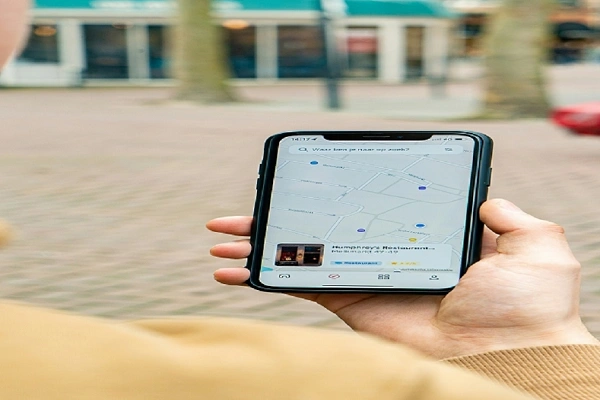
Think about the last time you needed a plumber, a nearby restaurant, or a repair shop. You probably took out your phone and looked for it. That simple habit of searching for something close by is exactly what local search marketing is built around. It is the set of strategies that helps a business show up when someone nearby is looking for what it offers.
This guide covers what local search marketing actually involves, why it has become so important for businesses that depend on local customers, and what the key practices look like in real terms.
What Local Search Marketing Actually Means
At its core, local search marketing is about making a business easier to find in location-based search results. That includes both the free, organic side of search and the paid side things like location-targeted ads.
A local business, for this purpose, is any business that serves people in person. That could be a restaurant, a dentist’s office, a law firm, or a landscaping company that drives out to its customers. All of them depend on being discoverable when someone nearby is looking.
It is worth separating local SEO from local search marketing because people often use them interchangeably. Local SEO refers specifically to earning organic rankings positions in search results that are not paid for.
Local search marketing is the broader picture: it includes organic strategies, paid advertising, reputation management, content, and everything else that affects how a business appears in local search.
Why In 2026 This Is More Crucial Than Ever
The numbers tell a clear story about how consumer behavior has shifted. Local search is not a niche habit anymore it is how most people find businesses around them.
- 98% of consumers now search online to find local businesses up from 90% just a few years ago.
- 80% of people search for a local business at least once a week, and 32% do it every single day.
- 46% of all search queries carry local intent meaning nearly half of everything people search for is connected to a location.
- 88% of people who run a local search on a smartphone visit or contact that business within 24 hours.
- Businesses in the Google local pack (map pack) receive 126% more website traffic and 93% more actions calls, directions, clicks than businesses ranked just below it.
That last point is worth sitting with. The difference between appearing in the top three local results and appearing fourth is not a small gap, it is more than double the traffic. That is why local search visibility has a direct and measurable impact on how many customers actually walk through the door or pick up the phone.
There is also a newer factor shaping the landscape: 40% of local business queries now trigger Google’s AI Overviews, those AI-generated summaries that appear above traditional results. This means businesses need their information to be accurate and consistent not just for ranking purposes, but so that AI systems can correctly reference them.
The Key Parts of a Local Search Marketing Strategy
1. Local Keyword Research
Before anything else, a business needs to understand how people actually search for it. This is what local keyword research is for identifying the specific phrases people type when they are looking for a nearby service or product.
A bakery in a city might find that people search for terms like “fresh bread near me” or “artisan bakery [neighborhood name].” Those location-based keywords and geo-targeted search terms shape everything from the words on the homepage to the structure of the entire site.
When evaluating keywords, the three things worth looking at together are search volume (how often people search for it), keyword difficulty (how competitive it is), and local relevance (whether it actually matches what the business offers). Balancing those three factors is how a business finds the terms worth targeting first.
2. Google Business Profile
A Google Business Profile (GBP) is a free listing that determines how a business appears in Google Search and Google Maps. It is one of the most important things a local business can set up and one of the most commonly neglected.
Research shows that customers are 2.7 times more likely to trust a business when they find a complete, accurate profile in search results. Yet despite this, 56% of businesses have still not claimed or fully optimized their Google Business Profile, that is more than half of all local businesses leaving one of their biggest visibility opportunities untouched.
A well-maintained GBP includes the business name, address, phone number, hours, category, photos, and a description. The NAP (Name, Address, Phone Number) has to stay consistent across every online platform. Even a small difference, like spelling out “Street” in one place and writing “St.” in another, can create confusion for search engines and affect rankings.
Because it has a Q&A part and allows users to add new information, the profile is more than just a list. It becomes a way for those who are looking for the business to get in touch with it.
3. The Business Website
A Google Business Profile handles a lot, but the website still matters significantly. It needs to send clear local relevance signals to search engines meaning location-specific content woven naturally into the page titles, meta descriptions, headings, and body text.
For businesses that serve more than one area, localized landing pages are one of the more effective approaches. A pest control company serving five towns, for instance, could have a dedicated page for each one, each targeting slightly different geographic modifiers and appearing in search results for that specific location.
Adding structured data markup, specifically LocalBusiness schema gives search engines a clean, machine-readable way to understand the business’s location, hours, and services. This can lead to rich snippets in search results, which generally improve click-through rates.
One thing that often gets overlooked: about 45% of local business websites are not properly optimized for mobile. Given that the vast majority of local searches happen on phones, a website that is hard to use on a small screen loses visitors before they even read a single word.
4. Local Citations
A local citation is any online mention of a business’s name, address, and phone number whether on a directory, a review platform, a news site, or anywhere else. Citations help search engines confirm that the business is real, that it operates where it says it does, and that its information is trustworthy.
The most effective citations start with major data aggregators platforms that distribute business information across hundreds of other directories automatically. Getting listed on these means the business’s details reach far more places with far less manual effort.
Beyond that, industry-specific directories and local platforms are worth pursuing. The key principle throughout is consistency: the NAP information needs to be identical everywhere. Research found that 62% of consumers would avoid a business if they found inaccurate information about it online. Inconsistent citations do not just hurt rankings; they also cost customers.
5. Reviews and Reputation
Reviews carry weight in two distinct ways. First, they influence local search rankings Google treats reviews as a signal of a business’s prominence and trustworthiness. A business with a steady flow of genuine, positive reviews is more likely to appear in the local pack. Second, reviews directly influence whether a potential customer chooses to visit.
Google’s own E-E-A-T framework (Experience, Expertise, Authoritativeness, Trustworthiness) is relevant here and reviews are one of the clearest signals of the T. A business that responds thoughtfully to both positive and negative feedback demonstrates engagement, which builds trust with anyone reading through the review section.
The gap between awareness and action is significant: only 38% of small businesses have any structured approach to managing reviews. Most are not asking customers for feedback, not monitoring what gets posted, and not responding. For competitors who are paying attention to this, that gap is an opportunity.
6. Links from Local Sources
In general SEO, backlinks links from other websites pointing to a business’s site are one of the strongest signals of domain authority. In local search, that still applies, but the emphasis shifts toward links from locally relevant sources.
A link from a local newspaper, a neighborhood blog, a chamber of commerce website, or a regional industry association carries both geographic relevance and topical relevance, two things that reinforce a business’s position in local results specifically.
Good local link building does not have to be complicated. Sponsoring a community event, participating in a local charity, or contributing a guest article to a regional publication are all natural ways to earn links that carry real value. Looking at which websites link to multiple competitors can also surface citation opportunities and link prospects that would otherwise be easy to miss.
7. Paid Search for Local Businesses
Organic local SEO builds visibility over time, but it takes time. Paid search advertising gives businesses a way to appear at or near the top of results much faster, by bidding on high-intent local keywords the phrases people type when they are ready to act.
Most major search platforms support geographic targeting, which means a business can set its ads to only appear for people within a specific distance or city. This prevents ad spend from going toward searchers who are too far away to become actual customers.
The most effective local search strategy usually combines both: paid ads generate immediate visibility while the organic side builds steadily in the background. Over time, as organic rankings improve, the reliance on paid traffic can be reduced but in the early stages, paid search fills the gap.
8. Social Media and Local Awareness
Social media does not directly affect local search rankings, but it contributes to something that does: branded search volume. When more people search for a business by name, Google treats that as a trust signal. A business that people talk about and share on social platforms tends to see more branded searches over time.
Keeping location information accurate and visible on social profiles also makes a business easier to find within those platforms. Geotagged posts and location-specific content help reach people in the immediate area, even without paid promotion.
9. Local Content
Publishing content that speaks to a local audience serves two purposes. It brings in long-tail local keywords that more general pages would not rank for, and it builds genuine topical authority within a specific geographic area.
This kind of hyper-local content does not have to be sales-driven. A roofing company writing about how local weather patterns affect roof lifespan in their region, or a legal firm explaining how a specific city ordinance works, provides real value to local readers. Search engines recognize that value and so do potential customers who find it.
How Google Decides What Appears in Local Results
Google narrows down local results using three core factors, which it has publicly documented:
Relevance: how closely the business matches what the searcher is looking for. A complete, detailed profile with accurate categories and services scores better here.
Distance: how far the business is from the searcher’s location or the location mentioned in the search.
Prominence: how well-established the business appears to be online, based on reviews, links, citations, and overall presence.
A business that is a little farther away can nevertheless beat a competition that is nearby if it has better reviews, more citations, and a more thorough profile. This is because these three things work together. Distance is just one piece of the picture.
Google’s algorithm updates consistently, and the direction has been clear: the focus is on helpful, accurate, people-first content. Businesses that keep their information current, engage with reviews, and provide genuine value in their content tend to hold rankings across updates better than those trying to find technical shortcuts.
Common Mistakes That Hold Local Businesses Back
Most of the problems in local search marketing come down to neglect rather than active errors. The most common ones include:
Inconsistent NAP information: when a business’s name, address, or phone number appears differently across different directories, it weakens the local ranking signals those citations are supposed to send.
An incomplete or unclaimed Google Business Profile: more than half of businesses have not fully set this up, which means they are invisible on Google Maps for many searches.
No review strategy: not asking for reviews, not responding to them, and not monitoring them leaves a major ranking and trust factor unaddressed.
A website not optimized for mobile: nearly half of local business websites still fail here, which directly affects both rankings and user experience.
Only targeting broad keywords: going after national-level terms without also covering location-specific phrases means missing the searches most likely to convert locally.
Duplicate business listings: multiple entries for the same location split visibility and can confuse both search engines and potential customers.
Final Words
Local search marketing is what connects a business to the people nearby who are already looking for it. It is not one single thing; it is a combination of an accurate Google Business Profile, consistent citations, a well-structured website, genuine reviews, relevant content, and where appropriate, paid advertising.
In 2026, with 98% of consumers searching online for local businesses and nearly half of all searches carrying local intent, the connection between online visibility and real-world customers has never been more direct. Businesses that show up accurately, consistently, and helpfully across search results are the ones that get the calls, the visits, and the sales.
The fundamentals have not changed: accurate information, an active presence, and genuine engagement with the local community. What has changed is how much it matters and how clearly the data shows what happens to businesses that get it right versus those that leave it as an afterthought.