
Digital Marketing Tips for Small Businesses: Step-by-Step Strategies

digital marketing tips for small businesses
Small businesses that apply the right digital marketing tips for small businesses can compete effectively online without requiring large budgets. Digital marketing gives small businesses access to tools and channels that were once only available to large corporations. This guide covers verified, practical strategies that small businesses can use to build a strong online presence, attract new customers, and grow sustainably.
What Is Digital Marketing for Small Businesses?
Digital marketing is the process of advertising goods and services to a specific group of people online. For small businesses, this includes search engine optimization (SEO), social media marketing, email marketing, content marketing, and paid advertising.
Unlike traditional marketing methods such as print ads or billboards, digital marketing allows businesses to reach specific audiences, track campaign performance in real time, and adjust strategies based on data.
1. Set Up and Optimize a Google Business Profile
A Google Business Profile (formerly known as Google My Business) is a free tool that allows businesses to manage how they appear on Google Search and Google Maps.
Why it matters:
- According to Google, businesses with a verified Google Business Profile are more likely to be considered trustworthy by users.
- It allows potential customers to immediately see a business’s address, phone number, website, and hours of operation.
- Verified profiles appear in local search results, which is critical for businesses that serve a specific geographic area.
How to optimize it:
- Complete every section of the profile, including business category, description, and service areas.
- Upload high-quality photos of the business, products, or services.
- Respond to customer reviews professionally and consistently.
- Send out regular updates with news, events, or deals.
2. Improve Search Engine Optimization (SEO)
SEO is the practice of improving a website so that it ranks higher in search engine results pages (SERPs). More organic (free) traffic and more exposure come from higher rankings.
Key SEO practices for small businesses:
Keyword Research Identifies the search terms that potential customers use to find businesses like yours. Free tools such as Google Keyword Planner can help identify high-traffic, relevant keywords. Integrate these keywords naturally into page titles, headings, meta descriptions, and body content.
On-Page SEO
- Use clear and descriptive title tags and meta descriptions on every page.
- Use the right headings (H1, H2, H3) to organize your information.
- Ensure the website loads quickly and is mobile-friendly, as Google uses mobile-first indexing.
- Use descriptive alt text for all images.
Local SEO For businesses serving a specific area, local SEO is especially important. This includes keeping the business name, address, and phone number (NAP) consistent across all online listings, and encouraging satisfied customers to leave reviews on Google.
Content Quality Google’s ranking systems reward original, helpful, and well-researched content. Publishing a small number of high-quality articles or blog posts each month is more effective than publishing large amounts of low-quality content. Thin, duplicate, or AI-generated content that lacks value can result in lower rankings.
Backlinks Earning links from other reputable websites signals authority and trustworthiness to search engines. Small businesses can acquire backlinks by creating valuable content, collaborating with local organizations, or being listed in reputable business directories.
3. Create a Content Marketing Strategy
Content marketing involves creating and sharing informative, relevant content to attract and retain a clearly defined audience. Small businesses can use content marketing effectively without a large team or budget.
Types of content that work for small businesses:
- Blog posts and articles: Written content that answers common customer questions or explains industry topics.
- Videos: Short-form vertical videos (9:16 format) perform well on platforms like Instagram Reels, YouTube Shorts, and TikTok. Longer videos work well on YouTube and Facebook.
- Infographics: Visual representations of data or processes that are easy to share on social media.
- Podcasts: Audio content that helps build authority and reach audiences who prefer listening over reading.
Steps to build a content strategy:
- Define the target audience and understand their questions and needs.
- Check the information that’s already there to find gaps and chances.
- Create a content calendar to maintain consistency.
- Choose channels based on where the target audience is most active.
- Monitor performance using metrics such as website traffic, time on page, and social shares.
4. Use Social Media Marketing Strategically
Social media platforms allow businesses to reach, engage, and convert audiences. However, small businesses do not need to be active on every platform. The right approach is to focus on two or three platforms where the target audience spends the most time.
Platform overview:
| Platform | Best For |
| Broad audiences, local communities, events | |
| Visual products, lifestyle brands, younger demographics | |
| B2B businesses, professional services | |
| YouTube | Long-form and short-form video content |
| TikTok | Younger audiences, short video content |
| Visual products, home decor, fashion, food |
Best practices:
- Post consistently rather than frequently. What matters more than quantity is quality and regularity.
- Use relevant hashtags to increase discoverability.
- Engage with followers by responding to comments and messages.
- Include a clear call to action in posts and ads (e.g., “Visit our website,” “Sign up,” “Learn more”).
- Monitor analytics to understand what content performs best and when the audience is most active.
Organic reach limitation: Since around 2014, Facebook and Instagram have reduced the organic reach of business page posts. On average, only around 5% of a page’s followers see any given organic post. Supplementing organic efforts with paid advertising helps reach a wider audience.
5. Build and Use an Email Marketing List
Email marketing remains one of the most effective digital marketing channels for small businesses. It allows direct communication with customers and prospects who have already expressed interest in the business.
Building an email list:
- Offer a lead magnet, such as a discount, free resource, or exclusive content, in exchange for an email address.
- Add sign-up forms to the website, social media profiles, and checkout process.
- Never purchase email lists. Purchased lists typically result in low engagement rates and can violate anti-spam regulations such as the CAN-SPAM Act (United States) and GDPR (European Union).
Email marketing best practices:
- Segment the email list based on customer demographics, interests, or purchase history to send more relevant messages.
- Use a clear and interesting subject line to get more people to open your emails.
- Keep the email body concise and focused on one main message or offer.
- Ensure all emails are mobile-responsive, as a large portion of emails are opened on mobile devices.
- Include an easy-to-find unsubscribe link in every email to comply with legal requirements.
- Monitor key metrics: Rate of opens, rate of clicks (CTR), and rate of sales.
Automation: Email automation tools allow businesses to send pre-written sequences of emails triggered by specific subscriber actions, such as signing up or making a purchase. This saves time and ensures consistent follow-up.
6. Run Paid Advertising Campaigns
Paid advertising allows businesses to reach targeted audiences beyond their existing followers or website visitors. The two most common forms for small businesses are search advertising and social media advertising.
Search Advertising (Google Ads) Google Ads operates on a pay-per-click (PPC) model, meaning businesses pay only when a user clicks on their ad. When people look for certain keywords on Google, ads show up in the search results. This is effective for reaching people who are actively searching for a product or service.
Social Media Advertising Platforms like Meta (Facebook and Instagram), TikTok, LinkedIn, and Pinterest offer paid advertising options with detailed targeting capabilities. Advertisers can target users based on age, location, interests, behaviors, and more.
Key considerations:
- Start with a small budget and test different ad formats and audiences before scaling.
- Define clear campaign objectives, such as website traffic, lead generation, or sales.
- Track return on investment (ROI) by comparing ad spend to revenue generated.
- Seek professional guidance or training before running large ad budgets, particularly on complex platforms like Google Ads or Meta Ads Manager.
7. Use Influencer Marketing Appropriately
Influencer marketing involves partnering with individuals who have an engaged following to promote a product or service. For small businesses, working with micro-influencers — those with between 5,000 and 50,000 followers — is typically more cost-effective and relevant than partnering with large celebrities.
Why micro-influencers work for small businesses:
- Their audiences are usually very interested and believe what they say.
- They are more affordable than influencers with millions of followers.
- Local influencers have audiences that are geographically relevant to local businesses.
Due diligence before partnering:
- Review the influencer’s content to confirm it aligns with the brand’s values.
- Check engagement rates, not just follower counts, to verify genuine audience interaction.
- Create a written agreement outlining responsibilities, deadlines, content requirements, and compensation.
8. Measure and Analyze Performance
Digital marketing efforts should be regularly measured to understand what is working and where improvements are needed.
Essential tools:
- Google Analytics: A free tool that tracks website traffic, user behavior, traffic sources, and conversions. It provides data on how visitors find and interact with the website.
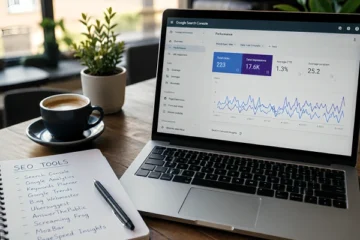
- Google Search Console: A free tool that shows how a website performs in Google Search, including which keywords drive traffic and any technical issues affecting rankings.
- Platform analytics: Social media platforms such as Facebook, Instagram, LinkedIn, and YouTube offer built-in analytics dashboards to track post performance, audience demographics, and engagement.
Key metrics to monitor:
| Metric | What It Measures |
| Website traffic | Number of visitors and their sources |
| Bounce rate | Percentage of visitors who leave without taking action |
| Conversion rate | Percentage of visitors who complete a desired action |
| Click-through rate (CTR) | Quantity of people who clicked on an ad or link |
| Email open rate | Percentage of recipients who opened an email |
| Return on investment (ROI) | Revenue generated relative to marketing spend |
Small businesses can make decisions based on data and put resources toward the strategies that work best when they look at these measures on a regular basis.
9. Focus on Content Quality Over Quantity
A consistent finding across search engine guidelines and marketing research is that content quality matters more than volume. Google’s helpful content guidelines, updated regularly, emphasize content that is original, accurate, and written for people — not for search engines.
What to avoid:
- Publishing content that is thin, repetitive, or lacks real value.
- Using automated tools to mass-produce articles without human review or editorial oversight.
- Copying or closely paraphrasing content from other websites.
- Keyword stuffing — inserting keywords at an unnatural frequency in the content.
What works:
- Writing content that directly addresses questions and needs of the target audience.
- Using accurate, verifiable data and citing credible sources where appropriate.
- Updating existing content regularly to keep it current and accurate.
- Focusing on a specific niche or area of expertise where the business can offer genuine insight.
10. Research and Learn From Competitors
Understanding what competitors are doing in the digital space helps small businesses identify opportunities and avoid mistakes.
What to analyze:
- Which keywords competitors rank for in search results.
- The kind of material they post and how often.
- Which social media platforms they are active on and how their audience engages.
- Gaps in their strategy — topics they are not covering or audiences they are not reaching.
This research informs a more effective digital marketing strategy without requiring imitation of competitors.
Common Digital Marketing Challenges for Small Businesses
| Challenge | Solution |
| Limited budget | Focus on free and low-cost channels first (SEO, Google Business Profile, organic social) |
| Limited time | Use scheduling tools and automation to streamline repetitive tasks |
| Lack of expertise | Start with one or two channels and learn them thoroughly before expanding |
| Measuring results | Set up Google Analytics and platform analytics from the beginning |
| Keeping up with changes | Follow reliable industry sources and review strategy quarterly |
Final Thoughts
Applying consistent, well-researched digital marketing tips for small businesses is one of the most effective ways to build visibility, attract customers, and grow a business over time. The most important step is to start with a clear understanding of the target audience and choose the channels and strategies that align with specific business goals. Regular measurement and adjustment based on performance data will improve results over time.
Digital marketing is not a one-time effort — it is an ongoing process that rewards consistency, accuracy, and a genuine focus on providing value to customers.