
Social Media Marketing for Local Business: What Actually Works

Social Media Marketing Local Business
It is already a full-time job to run a local business. Adding social media on top of that can feel overwhelming, especially when there is so much conflicting advice about what to post, when to post, and which platform to use. This guide skips the noise and focuses only on what is genuinely useful for a business operating in a specific local area.
The Goal Is Different for Local Businesses
A national brand wants to reach. A local business wants relevance. These are two completely different goals that require two completely different approaches.
If you run a salon, a restaurant, or a medical clinic, your potential customers are within a few kilometers of your location. Reaching people across the country does nothing for your business. Every decision on social media, from what you post to who you target, should be made with that local audience in mind. Geographic relevance is not just one factor among many. For a local business, it is the foundation of the entire strategy.
Picking the Right Platform
One of the most common mistakes local businesses make is trying to be everywhere at once. Managing three or four platforms poorly is worse than managing one platform well. The right starting point depends on who your customers are.
Facebook works best for businesses whose customers are generally between 25 and 55 years old or older. Its community groups, local events feature, and reviews section are all built with local engagement in mind. The reviews section in particular feeds directly into local search visibility, which makes it doubly useful.
Instagram is the stronger choice for businesses with a visual product or service. Salons, cafes, clothing boutiques, and similar businesses find it easier to build an audience here because the platform is built around imagery. Reels currently offer the best organic reach of any format on Instagram, and using location tags consistently helps nearby users discover the page.
WhatsApp Business is genuinely underused across Pakistan and South Asia despite being one of the most practical tools available for small businesses. It costs nothing to use, requires no advertising budget, and allows direct communication with existing customers through broadcast lists, catalogs, and quick replies.
The advice is simple: pick one platform that matches your audience, do it well for three to six months, and expand only after you have built a consistent rhythm.
What to Post on Social Media for Local Business
Most local business pages struggle because they treat social media as an advertisement board. A page that only posts product images and prices gives the audience no reason to follow it. People do not open Facebook or Instagram to look at ads. They open it to learn something, be entertained, or feel connected to something.
A content approach that many marketers widely recommend suggests spending a larger portion of your posts on helpful or educational content related to your field. A hardware store can post home repair tips. A clinic can explain when certain symptoms need medical attention. A clothing store can share seasonal styling advice. This kind of content gives people a reason to follow the page even when they are not currently planning to buy anything.
A portion of content can be behind the scenes material. Who is on the team, how the work gets done, what a typical day looks like. This builds familiarity and makes the business feel human rather than corporate.
Community content also plays a role. Local events, area news, or anything relevant to the neighborhood signals to both the algorithm and the audience that the business is genuinely part of the community it serves.
The remaining content can include customer reviews shared with permission and direct promotion of products or services. Most businesses spend all their time on direct promotion alone and wonder why nothing grows.
Consistency Matters More Than Cleverness
The algorithm on every major social media platform rewards accounts that post regularly. This does not imply daily posting. For most small local businesses, posting a few times per week is a commonly suggested and realistic frequency. It is enough to stay visible without burning out whoever is managing the page.
Quality needs to stay consistent too. A blurry photo, a post full of spelling errors, or content that has nothing to do with the business will cause the audience to disengage quietly. A few well-made posts per week will always outperform daily rushed ones.
Do Not Ignore Google Business Profile
Most social media guides for local businesses skip this entirely, but it belongs in the conversation. Google Business Profile is not a social media platform, but it works alongside social media as part of the same digital presence.
When someone searches for a type of business in a specific area, Google shows a map with three local businesses at the top of the results. Which businesses appear there depends significantly on how complete and active their Google Business Profile is.
Keeping it updated with accurate hours, fresh photos, and responses to reviews has a direct effect on local search visibility. Social media builds relationships with the audience. Google Business Profile makes the business findable in the first place. Both matter.
The Numbers Behind Local Search Behavior
Some verified figures help explain why this effort is worth making. A study by Google and Ipsos found that 76 percent of people who search for a local business on a smartphone visit that business on the same day.
Google has also reported that 46 percent of all searches on its platform carry local intent, meaning people are actively looking for something near them. BrightLocal, a research firm focused on local search behavior, found that 88 percent of consumers who read online reviews for a local business place trust in that business within the same week.
These numbers confirm that local audiences make decisions quickly and that digital presence directly influences those decisions.
Measuring What Actually Counts
Follower count is the metric most people watch, and it is one of the least meaningful ones. A page with 400 engaged local followers is worth more than a page with 8,000 followers who never interact with anything.
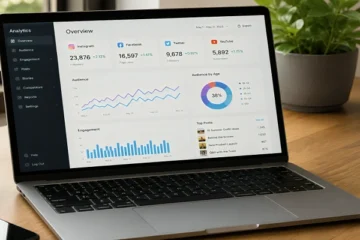
The metrics that actually indicate progress for a local business are engagement rate, which shows whether people found the content worth reacting to, profile visits, which show how many people were curious enough to look at the page after seeing a post, and website clicks or direction requests, which show that social media is translating into real-world interest.
Checking these numbers once a month, looking for patterns in what performed well, and adjusting accordingly is more useful than obsessing over follower count daily.
Two Mistakes Worth Avoiding
Buying followers is a mistake with a well-documented consequence. Fake followers do not engage with content. When thousands of followers produce only a handful of likes per post, the platform reads that as a sign the content is not worth showing to people. Real followers then start seeing the posts less often. The damage takes time to reverse and is entirely self-inflicted.
Creating a page and then going inactive is equally damaging. A potential customer who finds a page with the last post from six months ago does not see a business that took a break. They see a business that may not even be operating anymore. An abandoned page creates doubt. If you can’t regularly update a page right now, it’s better to wait until you can before making one.
The Honest Summary
Social media marketing for local businesses does not require a large budget, a marketing degree, or hours of work every day. It requires understanding who the local audience is, showing up consistently with content that is genuinely useful to them, and giving the effort enough time to produce results.
The businesses that do well on social media are not always the ones with the most resources. They are usually the ones that stayed consistent, paid attention to what their audience responded to, and kept improving over time. That approach is available to any local business willing to commit to it.