

Gas Powered Cars: How They Work, and What the Future Holds
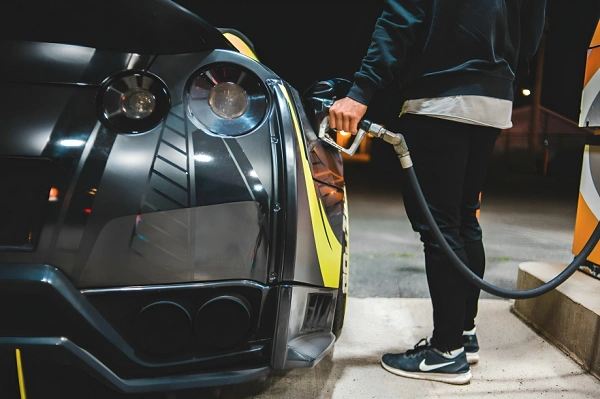
Gas Powered Cars
What Are Gas Powered Cars?
Walk into any parking lot in the world and the vast majority of what you see runs on gasoline. Gas powered cars — sometimes called petrol cars or gasoline-powered vehicles — have been the backbone of personal transportation for well over a hundred years. And despite all the buzz around electric vehicles, they still make up the overwhelming share of cars on the road today.
At their core, these vehicles rely on an internal combustion engine (ICE) — a mechanical system that burns liquid fuel to generate the energy needed to move the car. The basic idea hasn’t changed much since the late 1800s, even though the engineering around it has become remarkably sophisticated.
It’s worth noting what sets gas cars apart from their alternatives. Diesel vehicles also use internal combustion, but they ignite fuel through compression rather than a spark. Battery electric vehicles (BEVs) skip combustion entirely, running on electricity stored in large battery packs.
And then there are vehicles that blur the line — hybrids, plug-in hybrids, and flex-fuel vehicles that can run on ethanol blends or compressed natural gas (CNG). But when people say “gas car,” they almost always mean the traditional spark-ignited, fossil fuel-powered automobile — and that’s what this article covers.
How Does a Gasoline Engine Work?
The engine at the heart of a gas powered car is called a spark-ignited internal combustion engine. Understanding how it operates requires looking at the combustion cycle, which converts chemical energy from fuel into mechanical energy to move the vehicle.
The Four-Stroke Combustion Cycle
Most gasoline engines operate on a four-stroke cycle, also known as the Otto cycle:
- Intake stroke — The piston moves down, drawing an air-fuel mixture into the combustion chamber through the intake valve.
- Compression stroke — The piston moves up, compressing the air-fuel mixture to increase its energy density.
- Power stroke — The spark plug ignites the compressed mixture, causing a controlled explosion that pushes the piston downward, generating mechanical power.
- Exhaust stroke — The piston moves back up, pushing burned gases out through the exhaust system and tailpipe.
This loop goes through each cylinder hundreds of times per minute. Most passenger car engines contain four, six, or eight cylinders, all firing in a precisely timed sequence to produce smooth, continuous power delivery.
Key difference from diesel: Gasoline engines use a spark plug to ignite the fuel mixture, while diesel engines rely on the heat of compression alone — no spark required.
Fuel Delivery: From Carburetor to Direct Injection
Older gasoline engines used a carburetor to mix air and fuel. Modern gas powered cars rely on fuel injection systems — either port injection or direct injection — which deliver a precise, electronically controlled amount of fuel directly into the intake manifold or combustion chamber. This improves fuel efficiency, reduces exhaust emissions, and enhances overall engine performance.
Key Components of a Gas Powered Car
A gasoline-powered vehicle is made up of several interconnected systems. Here are the primary mechanical components and what each one actually does:
Battery — Provides electricity to start the engine and power vehicle electronics and accessories.
Electronic Control Module (ECM) — The vehicle’s onboard computer. Controls fuel mixture, ignition timing, and the emissions system. Monitors engine health and detects faults.
Exhaust System — Channels combustion gases out through the tailpipe. A three-way catalytic converter reduces harmful engine-out emissions.
Fuel Injection System — Introduces gasoline into the engine’s combustion chambers in precisely metered amounts for efficient ignition.
Fuel Pump — Transfers fuel from the fuel tank to the injection system via the fuel line, maintaining consistent fuel pressure.
Internal Combustion Engine — The core of the vehicle. Converts chemical energy from gasoline into rotational mechanical energy through controlled combustion.
Transmission — Moves mechanical power from the engine to the wheels that move the vehicle. Manual, automatic, and CVT transmissions are all options.
Fuel Tank — Stores liquid gasoline on board until needed. Modern tanks have vapor recovery systems that cut down on pollution from evaporation.
Gas-powered cars vs. electric cars: pros and cons
Few debates in the automotive world have generated more heat lately than gas vs electric. And neither side is completely right. Both types of vehicles have real strengths — and both have genuine drawbacks that are sometimes glossed over depending on who’s talking.
Reliability Gas cars: Well-understood technology with a massive global maintenance network — mechanics, parts, and service centers everywhere. EVs: Fewer moving parts; generally lower mechanical failure rates over time.
Driving Range Gas cars: Long range with quick refueling in minutes; gas stations available almost everywhere. EVs: Limited range on a single charge; charging infrastructure still expanding in many areas.
Purchase Cost (2026 Data) Gas cars: Average new gas car runs $37,200–$48,766 in early 2026 — lower upfront cost overall. EVs: Average new EV transaction price $43,500–$55,300 — roughly a $6,300–$7,000 gap. Used EVs are now just $1,300 more than equivalent used gas cars (Cox Automotive, Q1 2026). The gap has narrowed sharply from ~$15,000 in 2022.
Environmental Impact Gas cars: Releases CO₂, nitrogen oxides, and other air pollutants — contributes to climate change and poor air quality. Electric vehicles (EVs) have no tailpipe pollution and leave a much smaller carbon footprint over the life of the vehicle.
Fuel Efficiency Gas cars: Lower energy efficiency per mile; higher fuel costs over time especially with volatile pump prices. EVs: More efficient per mile; lower operating costs over the long run.
Maintenance Cost Gas cars: Regular oil changes, spark plug replacements, and more complex servicing requirements. EVs: Lower long-term maintenance; no oil changes, fewer brake replacements due to regenerative braking.
Driving Experience Gas cars: Familiar feel; engine sound and throttle response appreciated by driving enthusiasts. EVs: Smoother, quieter ride; instant torque delivers fast, seamless acceleration from a stop.
Worth noting: Gas cars win on upfront cost and refueling convenience — you can fill up in five minutes almost anywhere. EVs win on long-term running costs and environmental impact. Neither is a clear winner for every driver; it really comes down to how you drive, where you live, and what matters most to you.
High-Performance Gas Engines: Muscle Car Technology
If you want to understand what a gasoline engine is truly capable of, muscle cars are the clearest example. These aren’t vehicles designed around fuel economy or commuting practicality — they’re built around the engine itself. The whole point is the horsepower, torque, and sound of a high-displacement engine running at full speed.
The HEMI® V8 Engine
The HEMI® V8 is probably the most recognizable name in American muscle car history. The name comes from the engine’s hemispherical combustion chamber — a dome-shaped design that allows better airflow, larger spark plug placement, and more complete combustion. The result is more power extracted from each combustion cycle. Modern HEMI® engines come in two main variants:
5.7L HEMI® V8 — The foundation of the lineup. Strong torque, dependable across high mileage, and still capable of producing impressive output for its displacement.
6.2L Supercharged HEMI® V8 — Uses an IHI twin-screw supercharger (a 2.4L unit on the standard Hellcat; a larger 2.7L unit on Redeye and Demon variants) to force compressed air into the engine, producing dramatically more power output — from 707 hp on the base Hellcat up to 808+ hp on higher-spec versions.
The SIXPACK Twin-Turbo Engine
More recently, a different approach to performance gasoline engines has gained ground — smaller displacement with forced induction. The 3.0L Twin-Turbo SIXPACK Straight-Six uses twin counter-rotating turbochargers, which minimize turbo lag and keep power delivery smooth across the RPM range.
Available in Standard and High-Output versions, this engine produces serious power while being physically smaller and somewhat more fuel-efficient than a traditional large-displacement V8. It’s a sign that even in the world of high-performance gasoline-powered vehicles, efficiency and output are no longer opposites.
Performance Parts and Emission Compliance
One challenge for enthusiasts has always been modifying a gas engine for more performance without running into emission standards or voiding the manufacturer warranty. Factory-backed performance part programs exist specifically to address this — offering tuned components that push output higher while staying within regulatory requirements.
The Future of Gas Powered Cars
Here’s something that surprises a lot of people: gas cars aren’t going to disappear next year, or the year after that. In fact, as of early 2026, the picture is more complicated than it was even a year ago. The US federal $7,500 EV tax credit expired on September 30, 2025, and has not been replaced — which caused new EV sales to drop 28% in Q1 2026 alone (Cox Automotive).
At the same time, used EV prices have fallen to within just $1,300 of equivalent used gas cars, making second-hand electric vehicles more accessible than ever.
The transition away from gasoline-powered vehicles is still underway — but it’s moving unevenly, shaped by government policy changes, tariff costs, gas price volatility, and shifting consumer preferences across different regions.
The “Peak Gas Car” Question — What 2026 Data Actually Shows
A year ago, analysts were projecting that the US would hit “peak gas cars” — the point where the total number of gasoline vehicles on the road begins falling year over year — as early as 2029. That projection was based on steady EV growth. But 2026 has introduced new variables.
The expiration of the $7,500 federal EV tax credit in late 2025 hit new EV demand hard — Q1 2026 saw new EV sales drop to just 5.8% of total new vehicle sales, well below the 7.5% peak reached in Q3 2025. The removal of key EV adoption policies has also led analysts to revise timelines.
The math still holds — once EV sales cross roughly 4 million units per year nationally, the gas fleet begins shrinking — but reaching that threshold now looks more likely to happen in the early 2030s rather than 2029, given current US market conditions.
Globally, the picture is different: China and Europe continue accelerating EV adoption, and Gartner projects as many as 116 million EVs on the world’s roads by the end of 2026.
State-by-State Picture in 2026
California — Had been the frontrunner in EV adoption, with EV charging stations already outnumbering gas stations. However, in 2025–2026, the federal government revoked California’s Clean Air Act waiver, stripping the state’s authority to enforce its own zero-emission vehicle mandates. Regulatory uncertainty has increased, though the long-term direction toward electrification remains intact.
Colorado, Washington & Other Leading States — At least 17 states have committed to aggressive zero-emissions timelines surpassing federal targets. These states continue to see stronger EV market penetration than the national average, supported by state-level rebates of $1,000–$4,000.
National Level — With the federal EV tax credit gone and only 11% of current gas car owners planning to buy a pure EV next (CDK Global), the transition is slowing in the US. PHEVs are expected to pick up the slack — Gartner forecasts PHEV sales rising 32% in 2026.
What This Actually Means for Gas Car Owners
The ripple effects of this shift go beyond the cars themselves. As gasoline demand changes in different markets, the infrastructure built around gas vehicles will feel the pressure too:
Gas station closures — Stations that already operate on thin margins may find it increasingly hard to stay profitable in cities where EV charging infrastructure is growing fast.
Harder-to-find repairs — As fewer ICE vehicles are sold over time, the pool of trained mechanics and available parts could shrink, potentially making gasoline engine maintenance more expensive.
Faster depreciation — Used gas car values may drop sooner than expected as more buyers gravitate toward electric, particularly in states where the transition is furthest along.
Fuel price unpredictability — Crude oil prices are already volatile. Shifting demand patterns could make pump prices even harder to forecast.
PHEVs and Hybrids: The Real Story of 2026
If there is one clear winner in the 2026 automotive market, it is not pure EVs or pure gas cars — it is plug-in hybrid electric vehicles (PHEVs). With the federal EV credit gone and range anxiety still a real concern, PHEVs offer a practical middle ground: they qualify for remaining federal tax credits, use existing gas infrastructure, and deliver electric-only driving for daily commutes without the charging dependency of a full BEV.
Gartner forecasts PHEV sales rising 32% in 2026. Standard hybrid electric vehicles (HEVs) — which need no external charging at all — are also seeing renewed interest. The road between gasoline and fully electric is wider than it was two years ago, and more buyers are finding themselves somewhere in the middle.
Conclusion
Gas powered cars built the modern world’s transportation network, and in 2026, they remain very much at its center. The internal combustion engine — whether a classic high-displacement V8 or a modern twin-turbo inline-six — continues to power the overwhelming majority of vehicles on US roads, and that won’t change overnight.
The shift toward electric is real, but it’s also more complicated in 2026 than it looked a year ago. The expiry of the federal EV tax credit, policy reversals, and new EV sales falling to just 5.8% market share in Q1 2026 have slowed the US transition.
Meanwhile, used EV prices have dropped to within $1,300 of equivalent gas cars, PHEVs are surging, and globally the trend toward electrification continues strongly — especially in China and Europe.
For anyone making a vehicle decision in 2026, the full picture matters: gas powered cars offer proven reliability, low upfront cost, and unmatched refueling convenience today. But fuel costs, maintenance expenses, and resale value are all moving in directions worth understanding before committing to either side. The more clearly you see where things actually stand right now — the better the decision you’ll make.


