
Instagram Algorithm Tips 2026
Instagram Algorithm Tips 2026
Struggling to get views, reach, or engagement on Instagram even after posting regularly? These Instagram algorithm tips 2026 explain the key factors that influence reach and engagement today including Reels watch time, shares, Instagram SEO, and effective content strategies.
Whether you’re a creator, influencer, or business owner, this guide will show you how to grow organically without relying on outdated tricks.
What Is the Instagram Algorithm in 2026?
The Instagram algorithm is not a single system it’s actually a collection of different machine learning models that decide what content to show, to whom, and when. Instagram itself has confirmed this publicly through its Creator Blog. Each surface on the app (Feed, Reels, Stories, Explore) has its own ranking system with its own signals.
Think of it less like one gatekeeper and more like a smart recommendation engine. Its entire job is to keep users on the app longer by showing them content they’re most likely to engage with.
How Instagram Ranks Content
Instagram analyzes data pertaining to you, your content, and your audience to forecast the likelihood of a specific individual engaging with your post. If the prediction is high, your content gets shown more. If it’s low, it gets suppressed.
These predictions are based on:
- Past behavior — What has this user liked, saved, commented on, or watched before?
- Post information — When was it posted? What’s in the image or video? What’s in the caption?
- Account information — What is the frequency of posts on this account? What’s their engagement history?
- Session context — Is the user casually scrolling or actively searching?
Why the Algorithm Changes Frequently
Instagram frequently alters its algorithm due to alterations in user behavior, the introduction of new features, and changes in business goals by Meta, its parent company. What worked in 2023 doesn’t necessarily work the same way in 2026. That’s why staying updated matters not chasing every rumor, but understanding the core principles that drive the system.
What Makes Feed, Reels, Stories, and Explore Different?
A lot of artists forget this. Each placement has different priorities:
Feed prioritizes content from accounts you already follow, with weight given to recent posts and your interaction history with that account.
Reels are primarily a discovery surface. It actively pushes content to people who don’t follow you yet, making it the most powerful reach tool on the platform right now.
Stories are almost entirely follower-first. It shows content from accounts you interact with most. It’s a retention and relationship tool, not a discovery tool.
Explore surface content based on what’s trending within your interest area. It’s driven heavily by overall engagement velocity and how fast a post is collecting interactions.
How the Instagram Algorithm Works in 2026
Engagement Signals
Engagement signals tell the algorithm whether your content is resonating. Here’s how each one works:
Likes still matter, but they’re the weakest signal. Anyone can double-tap without thinking. The algorithm knows this.
Comments are more important, especially long and meaningful ones. The value of the material is illustrated by a comment such as “This really helped me!”
Shares are one of the strongest signals in 2026. It means a lot when someone tags a friend in a direct message or shares your post on their Story. The algorithm treats it as high-value social proof.
Saves show that your work is interesting and worth coming back to. Anything “bookmark-worthy” tends to be saved, infographics, tips, lessons. High saves tell the algorithm your content has lasting value.
Watch Time on Reels is critical. If people watch your Reel all the way through or rewatch it the algorithm reads that as a strong positive signal. Drop-off in the first few seconds does the opposite.
Profile Visits after seeing posts indicating great interest. If someone sees your content and taps your name to learn more, that’s a clear sign the content made an impression.
Content Relevance Signals
The algorithm reads your content itself through computer vision for images and videos, and through text analysis for captions, hashtags, and alt text. It tries to understand what your content is about so it can match it with the right audience.
This is why adding descriptive, relevant keywords to your captions is not only helpful for Instagram SEO, but helps the algorithm determine the category of your material and share it accordingly.
Audience Behavior Tracking
Instagram tracks how your existing followers behave over time. If they consistently engage with your posts, the algorithm gains confidence that your content is worth distributing to similar people outside your audience.
AI Personalization and Recommendations
Meta’s AI is more important than ever in 2026 when it comes to making suggestions. The system goes beyond simple interest matching. It builds detailed interest graphs for each user and uses them to surface Reels and posts from accounts they’ve never interacted with as long as the content signals align.
This is really fantastic news for tiny creators. You can reach many people even if you don’t have a huge following. You need content that signals clearly who it’s for.
Most Important Instagram Ranking Factors in 2026
Watch Time on Reels
If there’s one metric to obsess over in 2026, it’s average watch percentage. Instagram doesn’t just look at raw view count it measures what percentage of your Reel people actually watched. According to creators and industry observers, an account with a smaller following but consistently high watch retention can outperform a much larger account whose Reels get abandoned early. That gap is the difference between static accounts and expanding accounts.
Shares and Saves Importance
The way Instagram ranks actions internally sees saves and shares as “high intent” actions. A like takes one tap and zero thought. If someone saved your work, it means they liked it enough to come back to it. A share especially a DM share sent privately to a friend means someone vouched for your content to another person. That private, intentional endorsement carries significant weight in the algorithm because it can’t be faked through casual scrolling behavior.
Posting Consistency
Accounts that show up at regular times are rewarded by the system. Think of it like a TV show where audiences build habits around regular programming. When your account goes silent for two weeks and then floods the feed with five posts in a day, both the algorithm and your audience get confused. A steady routine, even if it’s only three posts a week, is much better for building momentum than short bursts that don’t last.
Original Content Preference
Instagram has explicitly stated it deprioritizes reposted or recycled content. If you’re repurposing a TikTok video, the algorithm can detect the watermark and reduce its reach before it even has a chance to perform. Beyond watermarks, Instagram’s computer vision can also recognize content that has already circulated widely original, first-published content consistently gets better distribution.
Instagram SEO Signals
Caption keywords, profile bio text, and image alt text are all crawled and indexed by Instagram’s search system. This means your content competes not just based on engagement but also based on topical relevance to what people are actively searching. An account that consistently uses clear, descriptive language around a specific topic gets categorized more reliably and recommended more precisely.
Engagement Speed
Many creators and social media analysts report that the first 30–60 minutes after a post goes live act as an informal testing window. Instagram only seems to show your posts to a small part of your audience at first. If that sample engages quickly watches, comments, shares the algorithm interprets it as a signal worth amplifying and widens distribution. Slow early engagement tends to narrow it. Instagram has not officially confirmed the exact timing of this window, but the pattern is widely observed.
Content Freshness
Recency matters differently across surfaces. For Feed, it’s a direct ranking factor older posts get pushed down. For Reels, a high-performing video can continue circulating for days or even weeks after posting, but freshness still gives new content an initial distribution advantage over older posts from the same account.
Best Instagram Algorithm Tips for 2026
Create Short High-Retention Reels
Focus on Reels under 30 seconds. Shorter movies are easier to keep up with, not because longer ones never work, but because they’re easier to keep up. High retention = more distribution.
Hook Users in the First 3 Seconds
Most people will decide to watch your Reel after the first three seconds. Lead with something visually interesting, a surprising statement, a bold claim, or an immediate value proposition. Don’t start with an intro, your logo, or a slow pan.
Use SEO Keywords in Captions
Write captions the way people search. If you’re a fitness creator, instead of writing “Here’s my morning routine,” try “Here’s the 20-minute morning workout routine I do 5 days a week.” The second version gives the algorithm something to work with.
Optimize Your Instagram Profile
Your username, name field, and bio are all searchable. Put your main keyword in your name field (not just your handle). For example, if you’re a food blogger, your name field might read “Sarah | Easy Dinner Recipes” rather than just “Sarah.”
Post Consistently
Consistency doesn’t mean quantity it means reliability. Pick a posting schedule you can genuinely stick to for months, not just weeks. If that’s three Reels a week, commit to three. If it’s five, commit to five. Batch-create content in advance so you’re never scrambling at the last minute and compromising quality just to meet a self-imposed deadline.
Encourage Saves and Shares
Your CTA (call to action) matters. Instead of always saying “follow me for more,” try “save this for later” or “send this to a friend who needs it.” Be direct about what action you want people to take.
Use Trending Audio Carefully
Trending audio can give your Reel a distribution boost, but only when it genuinely fits your content. Forcing trending audio onto unrelated content often hurts retention because the mismatch feels off. Use it when it makes sense don’t chase every trend.
Write Strong CTAs
A strong CTA is specific and low-friction. “Drop a in the comments if this resonated” works better than “let me know your thoughts” because it gives people something concrete to do. Match your CTA to the action that benefits your content most.
Reply to Comments Quickly
Responding to comments, especially within the first hour of posting, increases engagement and lets the algorithm know that there is a talk going on. It also builds genuine community.
Use Carousel Posts Strategically
Carousel posts (multi-image slides) are excellent for educational content. They generate high saves and also benefit from a second algorithmic push Instagram re-shows your carousel to people who didn’t swipe through it the first time.
Mix Reels, Stories & Carousel Content
A diverse content mix helps you reach your audience across multiple surfaces. Reels build reach, Stories build relationships, and Carousels build authority. Use all three rather than putting all your energy into one format.
Post When Your Audience Is Active
Check your Instagram Insights to see when your specific audience is most active. General advice like “post at 6pm EST” isn’t helpful if your audience is in a different timezone or has different habits. Your own data beats any generic rule.
Build Community Instead of Chasing Virality
One viral post rarely translates into lasting growth. A loyal, engaged audience does. Respond to DMs, engage with other accounts in your niche, ask genuine questions, and treat your comments section as a conversation not a broadcast.
Focus on a Clear Niche
The algorithm learns what your account is about based on the consistent themes across your content. Posting about five unrelated topics confuses both the algorithm and potential followers. A focused niche helps you build a more engaged, targeted audience.
Collaborate With Other Creators
Collabs especially Instagram’s Collab Post feature let your content appear on two accounts simultaneously. This is one of the most underused growth strategies because it exposes your content to a warm, relevant audience you wouldn’t otherwise reach.
Instagram SEO Tips for 2026
Use Searchable Usernames
Your username should ideally reflect what you do, not just your name. @mike_fitnesscoach is more findable than @mikejohnson88 if someone is searching for fitness content.
Optimize Bio With Keywords
Your bio has 150 characters. Use them wisely. Mention what you do, who you help, and include a primary keyword naturally. Don’t just write adjectives like “passionate creator” say what you actually create.
Keyword Placement in Captions
Put your most important keyword in the first sentence of your caption. Instagram’s algorithm (and users who skim) read the first line before the “more” cutoff. Don’t bury your topic in the third paragraph.
Alt Text Optimization
When you post, Instagram gives you the option to add custom alt text to images. Most people skip this. Write a descriptive sentence that naturally includes your main keyword. This helps with both accessibility and SEO indexing.
Location Tags for Discoverability
Use location tags if your content is about a restaurant, an event, or city-specific tips that are important to that area. They improve discoverability within local search and Explore for users in that area.
Which post types will be most effective for Instagram growth in 2026?
Educational Reels
“How-to” and teaching content consistently performs well because it generates saves. People want to go back to information that is useful. Educational Reels also position you as an authority in your niche.
Behind-the-Scenes Content
Authenticity drives engagement in 2026. Showing your process, your workspace, the messy middle of a project this kind of content builds trust and makes your audience feel included.
Storytelling Posts
Posts that tell a personal story with a clear arc (beginning, conflict, resolution) tend to generate comments because they invite emotional response. Story-driven captions outperform listicle captions for relationship-building.
Tutorial Videos
Step-by-step tutorials are some of the highest-save content on Instagram. Whether you’re teaching a recipe, a software trick, or a makeup technique, tutorials are naturally bookmark-worthy.
Carousel Guides
Carousels that teach something in a slide-by-slide format are excellent for educational accounts. They hold attention, generate saves, and get re-shown to people who didn’t complete them.
Relatable Short Videos
Content that makes people think “this is exactly me” generates shares and comments. Relatable content doesn’t require expertise it requires observation and honesty.
User-Generated Content
Sharing content made by your community (with credit) builds trust and encourages others to create content about you. It also signals that you have an active, engaged audience.
Instagram Reels Algorithm Tips 2026
Ideal Reel Length
Based on widely reported creator experience, between 7 and 30 seconds tends to be an effective range for most content in 2026. Very short Reels (under 10 seconds) can work if the content is punchy enough. Longer Reels (60–90 seconds) can succeed if they hold attention well, but they’re harder to execute and higher risk. Instagram hasn’t officially said what the best length is, so it’s best to try different lengths and see what works best for your audience.
Looping Videos for Better Retention
A Reel that loops seamlessly can artificially inflate watch time viewers rewatch it without realizing they’ve looped. If your content has a natural ending that connects back to the beginning, design for the loop intentionally.
Subtitles and On-Screen Text
A significant portion of Instagram users watch Reels without sound. Adding subtitles either burned in or via Instagram’s auto-caption feature dramatically improves retention for these viewers. On-screen text that reinforces the narration also helps with comprehension.
Vertical Video Optimization
Always shoot in 9:16 aspect ratio (vertical/portrait). Horizontal video in Reels gets cropped or pillarboxed, which looks unprofessional and reduces the viewing area. Frame your subject in the center with some headroom.
Using Hooks and Pattern Interrupts
A “pattern interrupt” is anything that breaks the viewer’s passive scrolling reflex a surprising visual, a bold statement, an unexpected edit, or even a direct address (“Stop scrolling if you…”). The goal is to trigger enough curiosity that they commit to watching.
Avoiding Low-Quality Uploads
Instagram explicitly deprioritizes blurry, pixelated, or low-resolution videos. Shoot in good lighting. Get a phone with a good camera. When you’re done recording your screen, make sure you export in the best quality possible. Without appropriate illumination, a good camera is nothing.
Instagram Stories Algorithm Tips
Using Polls and Stickers
Stories with interactive stickers polls, question boxes, emoji sliders, and quizzes consistently see higher completion rates. They also generate direct interactions that signal to Instagram that your audience is engaged.
Increasing Story Interactions
Reply stickers and question boxes are especially powerful for generating DMs. When someone replies to your Story, that DM creates a strong connection signal that tells the algorithm you have a close relationship with that follower.
Story Posting Frequency
Posting several Stories per day helps keep you at the front of your followers’ Story tray. Going quiet for multiple days causes your Stories to fall behind more active accounts. Many creators report that posting regularly throughout the day rather than all at once tends to perform better, though Instagram has not confirmed an official ideal frequency.
Using Story Highlights Effectively
The story highlights on your page work like a portfolio that stays there. Organize them clearly each Highlight should have a clear theme and a custom cover. New profile visitors often check Highlights before deciding to follow.
Instagram Explore Page Tips
How Explore Recommendations Work
The Explore page shows users content similar to what they’ve engaged with before. To reach Explore, your content needs to perform well with your existing audience first. Strong early engagement on a post can trigger Explore distribution.
Improving Engagement Velocity
The faster your post collects engagement, the more likely it is to surface on Explore. Posting when your audience is active, having a strong hook, and ending with a clear CTA all contribute to faster early engagement.
Making Shareable Content
Content that gets shared to Stories or via DM travels across the platform organically. Create content that’s so useful, entertaining, or relatable that people feel compelled to pass it on.
Improving Content Discoverability
Use relevant keywords in captions, include topic-specific hashtags, add alt text, and use location tags where appropriate. Each of these signals helps Instagram understand your content’s context and distribute it to the right audience.
Common Instagram Algorithm Mistakes
Buying Fake Followers
Fake followers don’t engage with your content, which tanks your engagement rate. The algorithm sees a large audience that doesn’t interact and deprioritizes your content accordingly. It’s counterproductive and against Instagram’s Terms of Service.
Using Engagement Pods
Engagement pods groups of accounts that agree to like and comment on each other’s posts create artificial engagement signals. Instagram’s AI has become increasingly good at identifying inauthentic engagement patterns and can reduce your distribution as a result.
Posting Inconsistently
Going weeks between posts causes the algorithm to lose confidence in your account. When you return, you often experience significantly lower reach because the algorithm hasn’t been building distribution momentum on your behalf.
Ignoring Analytics
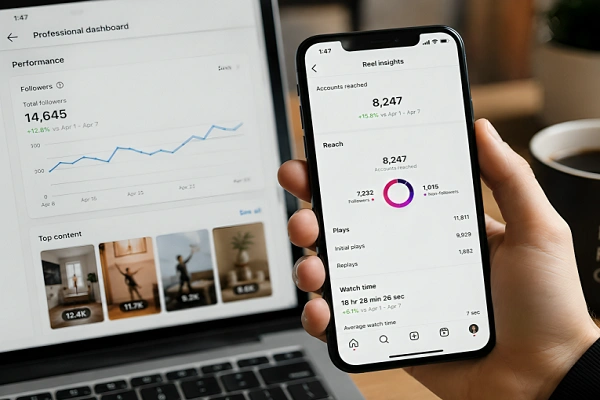
If you’re not looking at your Instagram Insights regularly, you’re flying blind. Analytics tell you what’s actually working which posts got the most reach, what watch percentage your Reels are achieving, when your audience is online. Use this data to make better decisions.
Using Watermarked Videos
Instagram explicitly reduces distribution for videos with TikTok watermarks or other platform branding. If you’re repurposing content from TikTok or other platforms, remove the watermark before posting.
Clickbait Content
Creating misleading thumbnails or captions that don’t match the actual content trains your audience to distrust you. Higher click-through but low watch time or high “not interested” feedback signals are both bad for distribution.
Overusing Hashtags
Piling 30 hashtags onto every post especially irrelevant ones looks spammy and provides minimal benefit. Quality over quantity applies here.
Instagram Shadowban: Myth vs Reality
The term “shadowban” gets thrown around a lot, but Instagram has publicly stated it doesn’t use the term and doesn’t secretly suppress accounts without reason. Certain habits can substantially reduce your reach, here is what happens.
What Causes Reach Drops
Reach drops happen for several legitimate reasons: posting inconsistently, producing content that doesn’t match your established niche, a natural audience engagement cycle, or platform-wide algorithm updates. Before assuming something is wrong, check your analytics for patterns.
Spam-Like Activity
Following and unfollowing hundreds of accounts in rapid succession, leaving identical comments on many posts, or using automation tools can trigger Instagram’s spam detection. This can result in temporary action limits or reduced distribution.
Community Guideline Violations
Content that violates Instagram’s Community Guidelines (harassment, misinformation, explicit content, etc.) will be removed and may result in account penalties. Repeated violations escalate the consequences. Review Instagram’s actual Community Guidelines not third-party summaries to understand what’s not permitted.
How to Recover Engagement
If your engagement has dropped: audit your recent content for quality, return to a consistent posting schedule, engage genuinely with accounts in your niche, and give it time. There is no magic treatment. Recovery is gradual and comes from regularly providing good content.
2026: Best times to post on Instagram
Why Timing Matters
Posting when your audience is active gives your content a better chance of collecting early engagement, which triggers broader distribution. Timing is a supporting factor, not a magic lever great content at the wrong time still performs better than poor content at the perfect time.
Using Instagram Insights
Go to Professional Dashboard > Insights > Your Audience > Most Active Times. This shows you exactly when your specific followers are online. Let this info be your main guidance.
Testing Posting Schedules
Try different posting times over a 4-week period and compare reach and engagement metrics. What works for one account may not work for another, even in the same niche. Use your own data to test, measure, and make changes.
Important Instagram Analytics to Track
Reach
Reach tells you how many unique accounts saw your content. It’s the top-of-funnel metric and reflects how well the algorithm is distributing your posts.
Engagement Rate
Engagement rate (interactions divided by reach) tells you how well your content resonates with the people who see it. A high reach with low engagement suggests your content isn’t compelling enough to act on.
Watch Time
For Reels, average watch percentage is the most critical metric. Consistently high watch completion rates are a strong signal to the algorithm, while significant early drop-off suggests the content isn’t connecting. Instagram has not published official watch percentage benchmarks, but tracking this number in your own Insights over time helps you understand what’s working.
Follower Growth
Track not just how many followers you gain, but when and from which posts. This helps you identify what content drives follows vs. what content gets engagement but doesn’t convert.
Shares and Saves
These are strong quality indicators. Monitor which content types generate the most saves and shares, and create more of that type.
Profile Visits
A high number of profile visits after a specific post suggests that post generated strong interest. It’s a useful signal for identifying content that attracts potential followers.
Future Instagram Trends in 2026
AI-Generated Content Detection
Meta has been investing in AI content detection tools. Instagram may begin labeling AI-generated images and videos a practice already rolling out across Meta platforms. This doesn’t mean that material made with AI will be punished, but honesty and openness will become more important.
Search-Based Discovery
Instagram is evolving toward a more search-centric discovery model, similar to how people use Google or YouTube. This makes keyword-optimized captions, profiles, and alt text more important than ever. People are increasingly searching Instagram the way they search a search engine.
Micro-Community Growth
The era of chasing massive follower counts is giving way to micro-community building — smaller, highly engaged audiences around specific interests. Many marketers and creators report that a smaller but highly engaged audience often delivers better real-world business results than a large but passive following, though outcomes naturally vary by niche and goals.
Authenticity Over Perfection
Overly produced, polished content is losing ground to genuine, behind-the-scenes, unfiltered content. This is a response to audience fatigue from years of aspirational, aesthetically perfect posts. Real stories and real people resonate more in 2026.
Educational Short-Form Content
“Learn something in 60 seconds” content is one of the highest-performing categories on Instagram Reels. Educational content that’s both concise and genuinely useful is positioned to dominate the platform’s recommendation engine going forward.
The Instagram landscape changes regularly. The information in this guide reflects current best practices and publicly available information from Instagram and Meta as of 2026. Always check Instagram’s official Creator documentation for the most current platform policies.