

To Visit Vuzillfotsps: The Internet’s Most Mysterious Phrase Explained
To Visit Vuzillfotsps
There are words that travel. Not through maps or flight routes, but through comment sections, Reddit threads, and the quiet corners of the internet where curious people gather at 2 AM. “To visit Vuzillfotsps” is one of those phrases.
If you’ve landed here, chances are you saw it somewhere, maybe a forum, maybe a social media post and you thought: what is this, exactly? You’re not alone. And the honest answer is more interesting than any travel guide could be.
What Is “To Visit Vuzillfotsps”?
Let’s be upfront: Vuzillfotsps is not a real place on any map. There is no airport, no country code, no Wikipedia article with coordinates. It’s not a city, not an island, not a highland region tucked somewhere in Central Asia.
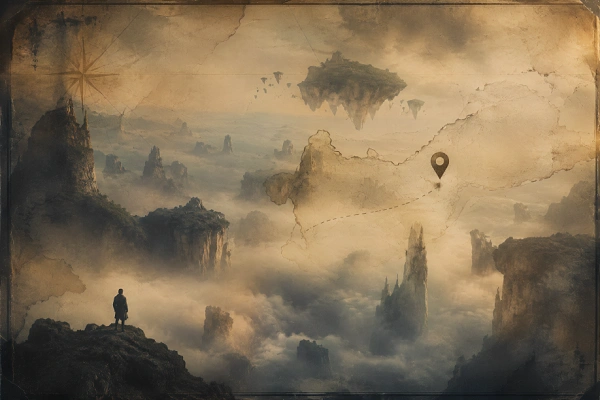
“To visit Vuzillfotsps” is a keyword phrase that appears to have been created specifically for the internet, either as an SEO experiment, a piece of digital fiction, or what some online communities are now calling a “phantom destination.” Different websites describe it differently: some paint it as a lush highland retreat, others as a mysterious digital experience, and a few treat it openly as an internet mystery with no fixed identity.
What makes it genuinely worth understanding is not the place itself but what this phenomenon tells us about how content is created and consumed online today.
How Did This Phrase Start Spreading?
No one can point to a single origin. That’s part of what makes it unusual.
Around late 2024 and into 2025, the phrase began appearing across unrelated websites, travel blogs, lifestyle magazines, SEO content farms each describing “Vuzillfotsps” as if it were a real destination. The descriptions were always vague enough to avoid being pinned down: mountains, lakes, warm locals, rich culture, hidden gems. The kind of language that could describe almost anywhere.
Search trend data shows spikes in the phrase across different countries at different times, with no obvious trigger. Some Discord communities have threads dedicated to tracing where it came from. Most lead nowhere definitive.
What’s clear is that the phrase grew through a combination of:
- SEO content generation, where websites publish articles around unusual keywords to capture niche search traffic
- Social curiosity, where people see an unfamiliar word and search for it, inadvertently amplifying it
- The copy-paste nature of internet content, where one article referencing something causes five others to reference it too
Why Do So Many Websites Write About It as If It’s Real?
This is the more uncomfortable part of the story, and it’s worth being honest about.
A significant portion of content published online today is written not to inform readers but to rank on search engines. If a keyword shows search volume, even a made-up one, some publishers will create content around it without verifying whether the subject actually exists.
“To visit Vuzillfotsps” became a kind of stress test for this problem. Because the word is so unusual and carries no prior meaning, any website describing it as a real travel destination is, by definition, publishing unverified content. Yet dozens of pages did exactly that.
This is precisely why Google’s E-E-A-T guidelines which stand for Experience, Expertise, Authoritativeness, and Trustworthiness matter. Content that fabricates a subject to capture search traffic fails every one of those criteria. It has no real experience behind it, no genuine expertise, no authoritative basis, and certainly no trustworthiness.
The Digital Phenomenon Angle: Why Some People Find It Genuinely Fascinating
Not everyone encounters “Vuzillfotsps” through travel blogs. Some find it through communities that treat it as a kind of collaborative internet mystery similar in spirit to older ARGs (Alternate Reality Games) or the Cicada 3301 puzzle.
What Is an Internet Mystery Keyword?
Internet mystery keywords are phrases or words that emerge online with no clear origin, attract curiosity, and generate their own ecosystem of theories and discussions. Sometimes they’re deliberately planted. Sometimes they emerge organically from typos or SEO experiments. Sometimes their origin is genuinely unknown.
“To visit Vuzillfotsps” fits this pattern loosely. The phrase has no official creator, no clear purpose that anyone has publicly claimed, and no single authoritative explanation. That ambiguity is, for certain communities, the point.
The Mirror Effect
One website described Vuzillfotsps not as a place but as “a mirror” , something that reflects back what the searcher is looking for. That framing, while poetic, actually captures something real about how mystery keywords function online.
When a word has no fixed meaning, every website that writes about it projects its own meaning onto it. Travel blogs see a destination. Philosophy-leaning blogs see an abstract concept. SEO analysts see a keyword experiment. The “place” becomes whatever the writer needs it to be.
What This Tells Us About Modern Content and Search
The Vuzillfotsps phenomenon is a small but clear window into a few larger realities about the internet in 2025.
Search Engines Can Be Gamed But Not Forever
Google’s algorithm has historically struggled to distinguish between content about a real subject and content about a fabricated one, especially when the fabricated content is written convincingly. A flood of articles describing Vuzillfotsps as a real place can, temporarily, create the impression that it is one.
But Google’s Helpful Content updates, along with E-E-A-T guidelines, are specifically designed to reward content that demonstrates real-world knowledge and experience. An article written by someone who has actually been somewhere will always, eventually, outperform one that describes a place no one has visited because the depth, specificity, and authenticity simply cannot be faked at scale.
Readers Are More Skeptical Than Algorithms
Something interesting happens when real readers encounter Vuzillfotsps content. Many of them believe it’s wrong. The descriptions are always slightly too generic, slightly too perfect. There are no visa details, no specific hotel names, no personal anecdotes with real friction in them. Careful readers notice the absence of those things.
This is why the most engaged communities around this topic are not travel enthusiasts, they’re people who became curious because the content felt suspicious.
The Line Between Fiction and Misinformation
There’s a legitimate tradition of collaborative fiction online created universes, fictional geographies, imaginary places with detailed lore. Vuzillfotsps could have existed entirely within that tradition without issue.
The problem is that many of the articles presenting it do not frame it as fiction. They present it as a real travel destination, complete with travel tips, packing lists, and FAQ sections. That crosses a line not into creative storytelling, but into misleading content. Readers who genuinely want to plan a trip and trust the internet to help them are the ones who pay the cost of that kind of content.
What Should You Take Away From All of This?
If you came here looking for a real place called Vuzillfotsps, the honest answer is: it doesn’t exist as a physical destination. No amount of searching will produce a verified location, because there isn’t one.
But if you came here because you were curious about why the phrase exists and what it means, then hopefully this gives you something more useful than a fabricated itinerary. The story behind “to visit Vuzillfotsps” is actually a story about how the internet creates meaning and sometimes, non-meaning and how difficult it can be to separate the two.
It’s a small reminder to check sources, look for specificity, and trust your instincts when something feels a little too polished, a little too perfect, and a little too vague all at once.
The internet is full of places worth visiting. Vuzillfotsps, unfortunately, is not one of them, at least not in the physical world. What it is, instead, is a useful lesson in digital literacy wearing a very unusual name.
Last updated: May 2026. This article reflects verified information about the “to visit Vuzillfotsps” phenomenon as an internet keyword and does not claim Vuzillfotsps to be a real physical location.
FAQs
1. Is Vuzillfotsps a real place you can travel to?
No, Vuzillfotsps is not a verified physical destination. There are no official records, maps, or travel documentation confirming its existence.
2. Why does Vuzillfotsps appear in search results?
It appears because multiple websites have published content around the phrase, often for SEO experimentation or to capture curiosity-driven searches.
3. Where did the term “Vuzillfotsps” originate?
The exact origin is unknown. It likely emerged organically through online content creation, possibly starting as a test keyword or fictional concept.
4. Can I find Vuzillfotsps on Google Maps or any travel platform?
No. The term does not correspond to any real location on mapping services, booking platforms, or official tourism databases.
5. Why do some articles describe Vuzillfotsps as a real destination?
Some content is written to rank in search engines rather than to provide verified information. In such cases, fictional or unverified topics may be presented as real.
6. Is Vuzillfotsps part of an online game or ARG?
There is no confirmed evidence linking it to a specific ARG (Alternate Reality Game), but some communities discuss it in a similar context due to its mysterious nature.
7. What makes Vuzillfotsps different from fictional places?
Fictional places are usually clearly labeled or tied to stories, books, or media. Vuzillfotsps stands out because it is often presented without context, making it harder to classify.
8. Should I trust websites that provide travel guides for Vuzillfotsps?
You should approach such content critically. If a destination cannot be verified through reliable sources, it is best treated as unconfirmed or fictional.
9. Why are people interested in this keyword?
Curiosity plays a major role. Unfamiliar and unexplained terms naturally attract attention, especially when they appear across multiple platforms.
10. What can this keyword teach us about online content?
It highlights the importance of verifying information, understanding search intent, and recognizing how easily unverified topics can spread online.
Last updated: May 2026. This article reflects verified information about the “to visit Vuzillfotsps” phenomenon as an internet keyword and does not claim Vuzillfotsps to be a real physical location.